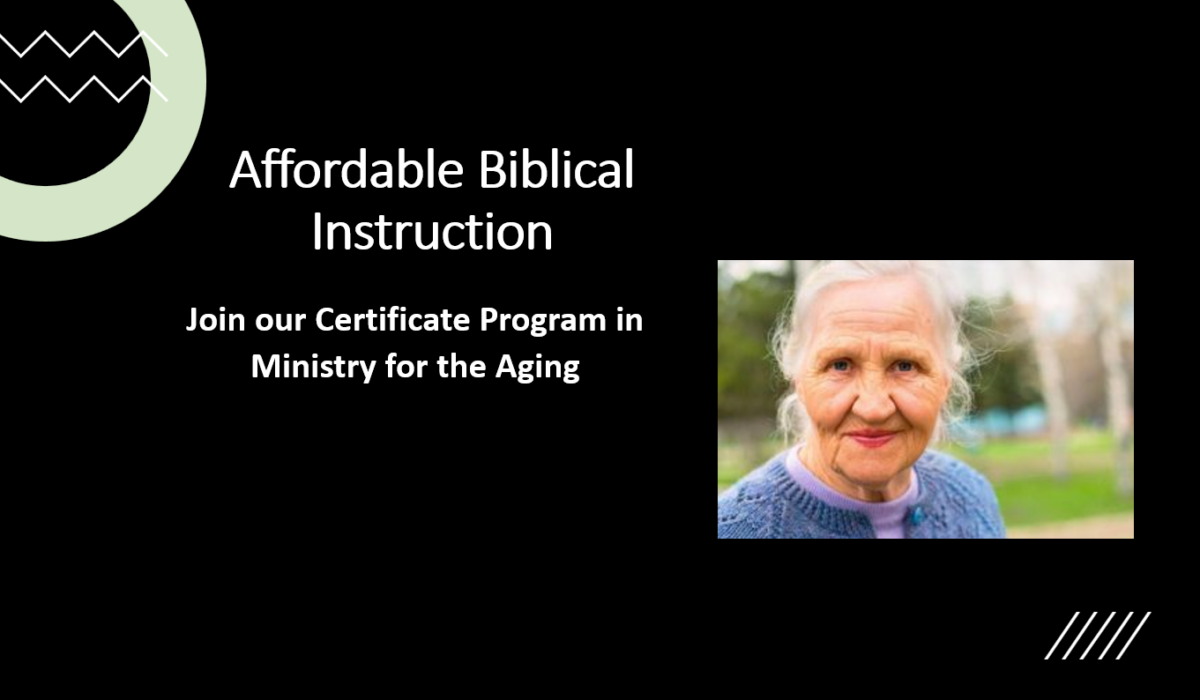
We are living through a profound demographic moment. For the first time in history, older adults represent one of the fastest-growing segments of our communities. And yet, recent articles indicate that The Church Is Losing Its Gray Heads. In fact, some note that many (not all) churches are hemorrhaging church goers at both ends of the age spectrum, youth and seniors.
And yet, 73% of Canadian Protestant churches (including evangelicals) report no formal intergenerational programming — and only 4% intentionally design worship, discipleship, or leadership development to span age cohorts (Angus Reid Institute, Faith in Canada 150, 2017).
Does this concern you? Then join the ElderCare Network for this free Zoom webinar exploring how churches can bridge generational divides and challenge ageism in Canadian congregational life. We will survey the landscape of what’s happening in the churches, look at a model of intergenerationally integrated churches, and explore the impact of ageism. There will be ample time for discussion. Come and discover practical ways to strengthen intergenerational relationships and affirm the dignity and spiritual vitality of older adults.
Saturday, February 14, 2026 (10:30 – noon (ET):
“Intergenerational Church and Confronting Ageism (Part 1)”
You will be sent the Zoom link after registration and close to the date of the webinar.
(If you are unable to attend this session, but would like to attend a moderator lead repeat of the session, please let us know by emailing: wsinstitute@outlook.com; a moderator lead repeat will be held on Wednesday February 25 in the evening (7:30-9 ET)
Stay tuned for our next webinar:
A comprehensive model for church-based seniors’ ministries
March 14, 2026 (with moderator lead repeat on March 25)
Some statistics and data about Ageism and Intergenerational Issues:
1. Barna Group (2022): 68% of senior pastors reported “significant generational siloing” in programming, leadership, and discipleship—e.g., separate services, ministries, and even budgets for teens, young adults, and seniors—with minimal cross-generational integration.
2. Nearly 70% of Canadian evangelical youth (ages 18-29) who were active in church as teens disengage entirely by age 25, citing “lack of relevance” and “siloed programming” as top reasons (EFC Youth Retention Study, 2021).
3. Only 27% of youth aged 18-29 regularly attend evangelical church services, compared to 52% of those aged 65 and older.
4. 89% of Canadian evangelical youth who attend church rarely or never interact meaningfully with adults over 65 outside of family — despite 72% saying they want spiritual mentorship from older believers (Focus on the Family Canada, NextGen Faith Engagement Survey, 2022).
5. Over 90% of Canadian evangelical churches structure youth ministry as a parallel, age-segregated program, not as an integrated expression of the whole body — and 0% of surveyed churches reported evaluating this model for theological or missional fidelity (Evangelical Fellowship of Canada, Generational Bridge Report, 2020).
6. Studies suggest that only 9% of evangelical churches have intentional strategies for meaningful intergenerational dialogue and mutual understanding.